
Kavita India: The Poets' Collective — Inaugural Online Series, dates to be announced
Gujarati Poem

તસુ તસુ કરતાં

About this poem
A poem in the form of a questionnaire — name, occupation, stipend, homeland — that traces how a forest-dwelling community's livelihood, language, and land were worn away, inch by inch, as tools, trade, and bondage replaced an older way of life.
About Gujarati
Gujarati is an Indo-Aryan language and the official language of the Indian state of Gujarat, spoken by roughly 55–60 million people worldwide. One of the 22 scheduled languages of India, it has a literary tradition spanning more than 500 years, from medieval devotional poetry to a wide-ranging modern literature of fiction, essays, and poetry.
Original · Gujarati (this page)

શું નામ?
ખાતો પીતો ને વેળાએ ભૂખ્યો.

કામકાજ?
નજર ઝનૂન અને ભાલોડીભેર સરકવું
વનવગડા વીંધવા.

જીવાઈ?
દનનો દાણો ને રાતનો પહાણો

દેશ?
ડુંગરા.

પગદંડી ન હતી
મહેનત મળતરનાં પલ્લાં રચાયાં ન હતાં
ધણીબૈયર બાધા રાખતાં
વેલો વધારવા
ડુંગર અગ્નિએ નવાડતાં
દેવના કાળજે જઇ અડતો દવ
ભોગ ભેગો હરો પીવાતો
એ વેળાની વાત છે

પછી પલ્લાં રચાયાં
કુહાડીમાં હાથા પેઠા
વેઠ આવી
વાયરા ને વગડા વઢાયા
ગયાં જડમૂળ પાટ ને ખેડ
કામઠી ગઈ ધનુષ આવ્યું
ધકોડો ગયો ને તીર લાગ્યું
જનવનના ઠરાવ તૂટ્યા
તળાવ ફૂટ્યાં

તસુતસુ કરતાં જીવાઇ,નામ,દેશ ને કામ ગયાં

Translation · English

Name?
Bolting and bringing and periodically ravenous.

Occupation?
Spotting savagery and slithering like a spike
to splash through the woods.

Stipend?
Dabs for the day and a slab for the night.

Homeland?
Hills.

There was no trail.

The pans for toil and wages were not forged
for raising the offspring.

The spouse and mate would observe the vows
to douse the mountain with fire.

The fire would graze god’s heart
when liquor was swigged with the libation.

This tale goes back to that time.

Later the scales were shaped
and the shaft went into the hatchet.

The bondage arrived,
the winds and woods were sheared,
lost were the roots,
flat lands
and the fields,
meadows,
hills,
waters,
rocks
all disappeared,
arch replaced the bow
metal replaced the sharp wood of the arrow,
accords of men and forests were snapped.

The lakes burst,
the livelihoods,
names,
homelands
and labour
vanished
inch by inch.

Translated by Dileep Jhaveri.
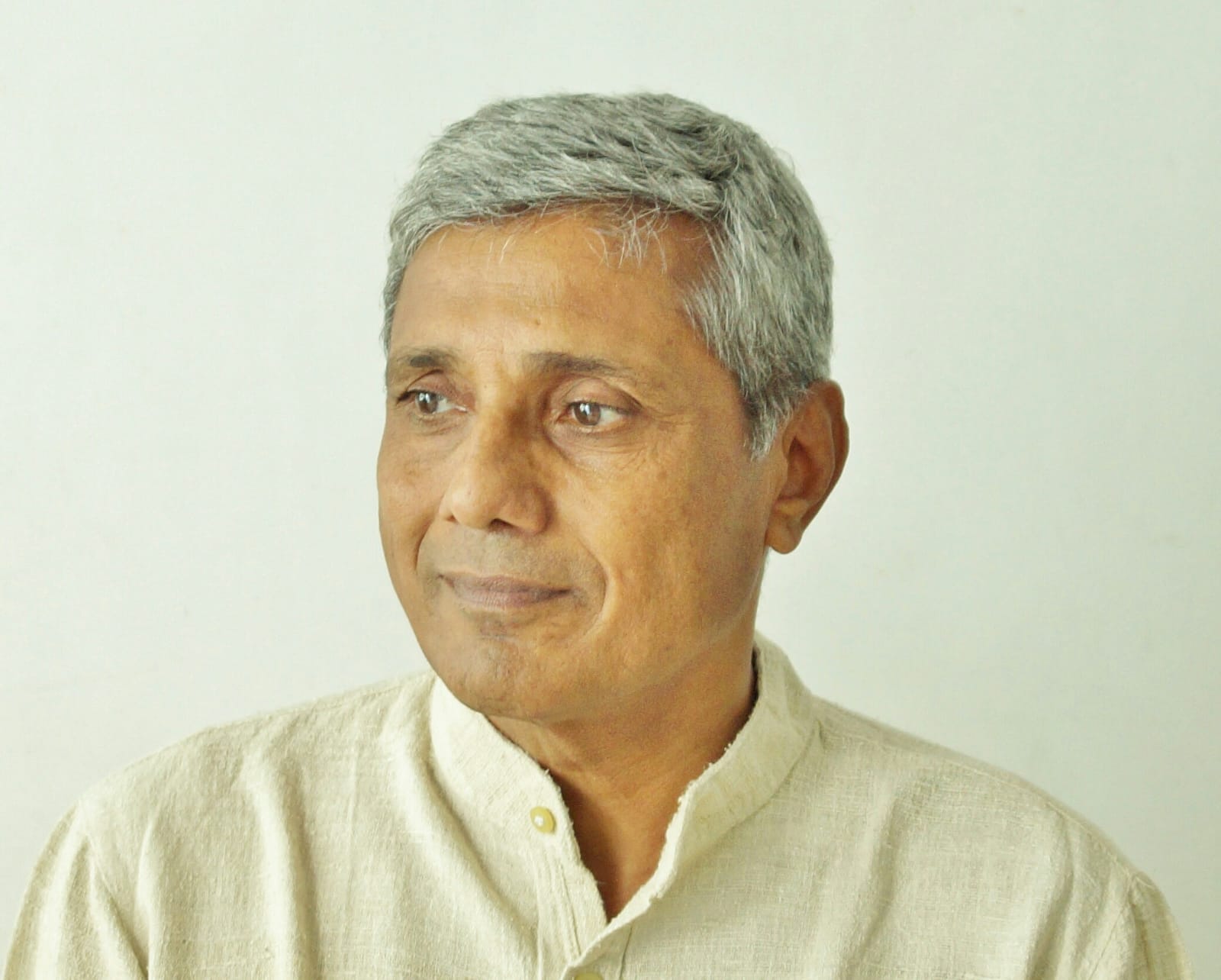
About the translator
Dileep Jhaveri
Dileep Jhaveri translated this poem from its original Gujarati into English.
Kanji Patel
About the poet
Kanji Patel has five poetry collections in Gujarati to his credit—Janpad (The Vicinage), Dungardev (The Mountain Deity), Desh (The Country), Dharatina Vachan (Earth Song) and Amne Naa Bhulataan (Do Not Forget Us)—besides works of fiction and ethnography. Dahelu (translated in English as Rear Verandah), also translated into Marathi, is his best known fictional work. Books of selected poems in English and Hindi translation have been published as Earth Song in English and Dharati ke Vachan in Hindi recently. His poems have been published in print journals such as Indian Literature and Chandrabhaga, and online in Muse India, Asymptote, Cordite Poetry Review, and Antonym. His poems have appeared in Marathi, Bangla, Telugu, Kannada, Malayalam and Hindi, and also in anthologies in Irish, Slovenian and Swedish languages. He has been invited to various national and international literature festivals, including the SAARC and Commonwealth literary meets. He has been a member of Indian writers' groups sent by the Central Sahitya Akademi and National Book Trust to Sweden (1998) and Germany (Frankfurt Book Fair 2013). Patel founded and published 'Vahi', a journal of poetry, rituals and multilingual expression. He has established the Kaleshwari tribal art fair in Mahisagar district to provide a platform for the cultural expression of Adivasis and denotified and nomadic tribes from across India. He has edited the Gujarat, Diu, Daman, Dadra & Nagar Haveli volume of the People's Linguistic Survey of India led by G. N. Devy. Patel has curated contemporary poetry of Adivasi, denotified and nomadic tribes in India in original from 126 languages—400 poems by 370 poets—into English and Hindi translation in two volumes. He has translated into English songs and stories from oral and contemporary literature from tribal and nomadic tribes, and the translations have appeared in the journal 'Indian Literature', some of which were translated with others. He received the Umashankar Joshi Prize (1992) for novel, the Katha Award (1996), the Dhumketu Prize (2008), the Shivshankar Joshi Award (2015), and the Satchidanand Award (2026).

More by Kanji Patel

English Inch By Inch

0 Comments

Look & Feel
Colour Theme
Text Size